November 8, 2026
Remembrance Sunday: Why we must never forget.
Remembrance Sunday is an opportunity to honour those who sacrificed their lives in conflict in the pursuit of peace.
Today on Remembrance Sunday, we come together as a nation to honour those who gave their lives in the service of others, to remember the devastating human cost of conflict, and to reflect on our responsibility to future generations.
Across Britain, communities will gather at war memorials, churches and public spaces. Wreaths will be laid, the Last Post will sound, and millions will observe two minutes of silence.
These simple acts of remembrance carry extraordinary significance. They connect us with generations who experienced the horrors of war and remind us that the freedoms we enjoy today have often come at an unimaginable human cost.
Remembrance Sunday has its origins in the aftermath of the First World War, when an entire generation was scarred by the scale of death and destruction. The Armistice of 11 November 1918 brought an end to the fighting on the Western Front, but the suffering endured by millions did not end with the silence of the guns.
The hope that such a catastrophe would never happen again was tragically short-lived.
The Second World War, followed by conflicts in Korea, the Falklands, Northern Ireland, Iraq, Afghanistan and elsewhere, has ensured that remembrance remains relevant to successive generations.
Behind every name engraved on a memorial is a life interrupted.
A son or daughter who never returned home. A husband or wife whose future was stolen. A parent whose children grew up without them. Families and communities left to carry the consequences of war for decades.
We must also remember those whose contributions have too often been overlooked: women in uniform, Commonwealth personnel, merchant seafarers, civilian victims and the countless individuals whose courage and suffering rarely appear in our history books.
Remembrance must be inclusive, recognising every life affected by conflict, regardless of nationality, background or circumstance.
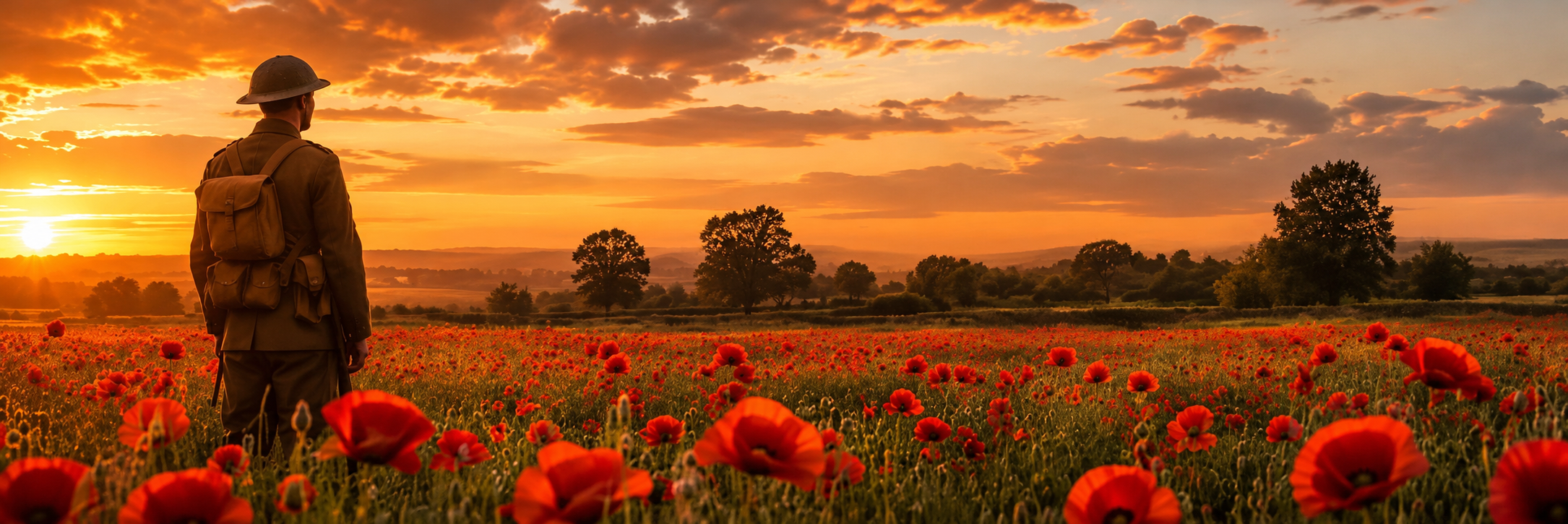
Remembrance must extend beyond ceremony, embracing meaningful support for those affected by service.
Through my work with charities supporting serving personnel, veterans and military families, I have come to appreciate that the consequences of conflict extend far beyond the battlefield.
For many, the physical and psychological effects of service can last a lifetime. Families face challenges involving bereavement, disability, housing, employment and access to appropriate support.
Our responsibility cannot begin and end with the wearing of a poppy or the observance of a silence. It must be reflected in how we support those who have served and the families who stand alongside them.
But Remembrance Sunday should also encourage us to consider the responsibilities of political leadership.
Honouring military service does not mean glorifying war. Nor should it prevent us from questioning the decisions that send people into conflict.
Indeed, the greatest tribute we can pay to those who died is to work towards a world in which future generations are not called upon to make the same sacrifice.
With war continuing to devastate communities across the world, the message of remembrance remains as urgent as ever.
Today, as we stand in silence, we should remember not only how people died, but the lives they might have lived.
We owe the fallen our remembrance. We owe the living our support. And we owe future generations our determination to pursue peace.
We will remember them.
Lest we forget.
Contact Us
For an informal and confidential discussion about this article, or on any other subject, please contact our Founder & CEO, Philip Nelson, on 020 3590 9978 or via email at philip.nelson@thehiringdept.com.
Philip has over twenty years of experience in charity governance and executive search and currently serves as a Trustee of Coram Beanstalk and as the Policy Development Lead for Heritage & Tourism at The Green Party.