July 31, 2026
The Emperor’s New Clothes: Why good leaders need people who will tell them the truth.
Hans Christian Andersen's The Emperor's New Clothes is more than a fairy tale; it is a timeless lesson in leadership, governance and organisational culture.
Hans Christian Andersen’s The Emperor’s New Clothes is often dismissed as a children’s fairy tale. It is in fact anything but.
It’s a story about leadership, power, organisational culture and the dangers of collective silence. In many ways, it feels even more relevant today than when it was first published in 1837.
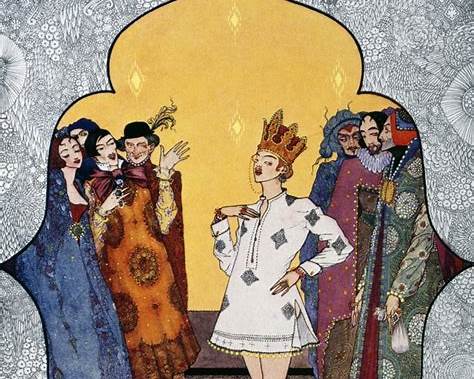
The plot is familiar. Two swindlers convince an emperor they can weave magnificent clothes that are invisible to anyone who is incompetent or foolish. Nobody wants to admit they cannot see the garments. Ministers praise them. Courtiers admire them. The public applauds as the emperor proudly parades through the streets wearing nothing at all.
Only one small child speaks the obvious truth.
“The Emperor has no clothes.”
It is a simple story, but it captures something deeply human.
Too often, organisations reward agreement more than honesty. People become reluctant to question assumptions, challenge senior leaders or raise uncomfortable truths. Careers can appear safer when we tell leaders what they want to hear rather than what they need to hear.
But the consequences can be profound.
Boards miss emerging risks. Businesses continue investing in failing strategies. Governments double down on ineffective policies. Charities pursue initiatives that no longer serve their beneficiaries. Teams convince themselves everything is fine because nobody wishes to be the first person to say otherwise.
Psychologists describe this as groupthink, the tendency for groups to seek consensus rather than critical evaluation. History is littered with examples where intelligent, experienced people collectively ignored obvious warning signs because challenging the prevailing narrative felt too risky.
The strongest organisations are those where people feel safe to question assumptions, challenge decisions and speak uncomfortable truths.
The strongest leaders understand this.
They do not surround themselves with people who always agree. They actively seek constructive challenge. They welcome diverse perspectives. They encourage colleagues to ask difficult questions, test assumptions and identify blind spots before problems become crises.
This requires humility.
Leadership is not about appearing infallible. It is about creating an environment where people feel psychologically safe enough to speak honestly without fear of ridicule or retribution.
The same principle applies to trustees, non-executive directors and governors. One of their most important responsibilities is not simply to support executive leadership but to provide thoughtful challenge. Good governance depends upon curiosity, respectful questioning and the courage to say, “I’m not convinced.”
Perhaps the most important character in Andersen’s story is not the emperor, but the child.
The child has no political agenda, no status to protect and no fear of looking foolish. They simply describe reality as they see it.
Every successful organisation needs people willing to play that role.
In an age of social media, echo chambers and increasingly polarised debate, the temptation to conform has arguably never been greater. Yet innovation, good governance and effective leadership all depend on creating cultures where truth matters more than appearances.
Because the greatest risk is not making mistakes.
It is building an organisation where everyone can see the problem, but nobody feels able to say, “The Emperor has no clothes.”
Contact Us
For an informal and confidential discussion about this article, or on any other subject, please contact our Founder & CEO, Philip Nelson, on 020 3590 9978 or via email at philip.nelson@thehiringdept.com.
Philip has over twenty years of experience in charity governance and executive search and currently serves as a Trustee of Coram Beanstalk and as the Policy Development Lead for Heritage & Tourism at The Green Party.