October 26, 2026
Budget 2026: Has the Chancellor done enough for Britain’s charities?
Today's Budget offers some welcome investment in homelessness, affordable housing and vulnerable communities, but does little to address the growing financial pressures facing Britain's charities.
The Budget promises breathing space for households and businesses, but will it provide the same relief for Britain’s charities?
For a sector already struggling with rising costs, increasing demand and considerable financial uncertainty, the Chancellor’s announcements offer some encouragement. However, there remains a fundamental question: does the Government sufficiently recognise the contribution charities make to our economy, public services and communities?
Some welcome investment.
There are undoubtedly positive announcements.
An additional £432 million for tackling rough sleeping over the next two years, bringing additional funding to £874 million between 2026 and 2029, represents a welcome commitment.
The additional £1.5 billion for approximately 10,000 social and affordable homes could also help address some of the underlying causes of homelessness and poverty.
Further investment includes £55 million over two years to accelerate the Violence Against Women and Girls Strategy, alongside funding for early-years literacy and youth employment.
These commitments offer opportunities for charities delivering frontline services, although much will depend on how funding is distributed and whether voluntary organisations can access it.
The growing cost of employing people.
From April 2027, the National Living Wage will increase by 3.9% to £13.21 an hour.
Fair pay is essential, particularly in social care, where recruitment and retention remain persistent challenges.
However, charities cannot simply increase their prices to absorb additional employment costs.
For organisations already managing higher employer National Insurance contributions, inflationary pressures and restricted funding, another increase in payroll expenditure will place further pressure on operating budgets.
Unless government contracts and grants reflect the true cost of delivering services, charities will face increasingly difficult decisions about staffing and service provision.
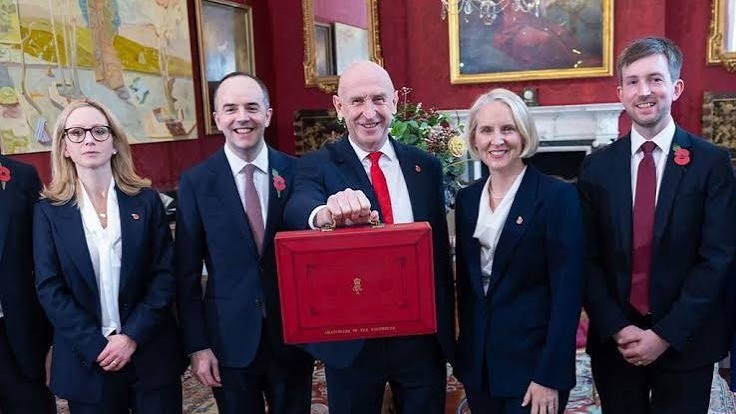
Without meaningful investment and recognition of their essential contribution, the question remains: Can Britain afford the consequences of a financially weakened voluntary sector?
Will household support reduce demand?
The Chancellor has announced a £100 Household Energy Payment for eligible households in England, alongside an extension of the VAT reduction on electricity.
These measures should provide some welcome relief.
Nevertheless, financial hardship extends considerably beyond energy bills.
Food banks, debt advice charities, homelessness organisations and community support services continue to experience substantial demand.
Temporary financial assistance may alleviate immediate pressures, but it cannot substitute for sustained action on poverty, insecure housing and inequality.
A missed opportunity for the voluntary sector?
Perhaps the most disappointing aspect of today’s Budget is the absence of a substantial, dedicated package addressing the financial sustainability of charities themselves.
There is little evidence of a broader commitment to strengthening charitable giving, improving unrestricted funding or ensuring that public service contracts properly cover delivery costs.
The Government’s plans for greater devolution and preventative public services could create important opportunities. However, these ambitions will succeed only if charities are treated as genuine strategic partners rather than inexpensive substitutes for statutory provision.
What happens next?
For charity leaders and trustees, the immediate priorities remain financial resilience, workforce planning, income diversification and demonstrating impact.
The 2027 Spending Review will be particularly important in determining whether the Government’s ambitions translate into sustainable investment.
Britain’s charities contribute far more than the services they deliver. They strengthen communities, tackle inequality and provide support where statutory provision frequently falls short.
Today’s Budget offers some welcome commitments, but it does not resolve the fundamental financial challenges facing the sector.
The question is no longer simply whether charities can afford to deliver more.
It is whether the country can afford the consequences if they cannot.
Contact Us
For an informal and confidential discussion about this article, or on any other subject, please contact our Founder & CEO, Philip Nelson, on 020 3590 9978 or via email at philip.nelson@thehiringdept.com.
Philip has over twenty years of experience in charity governance and executive search and currently serves as a Trustee of Coram Beanstalk and as the Policy Development Lead for Heritage & Tourism at The Green Party.